Kostenlose Travis Perkins PLC (TPK) technische Analyse Signale
Travis Perkins PLC (TPK) Signal mit technischer Analyse zu 23 Jul
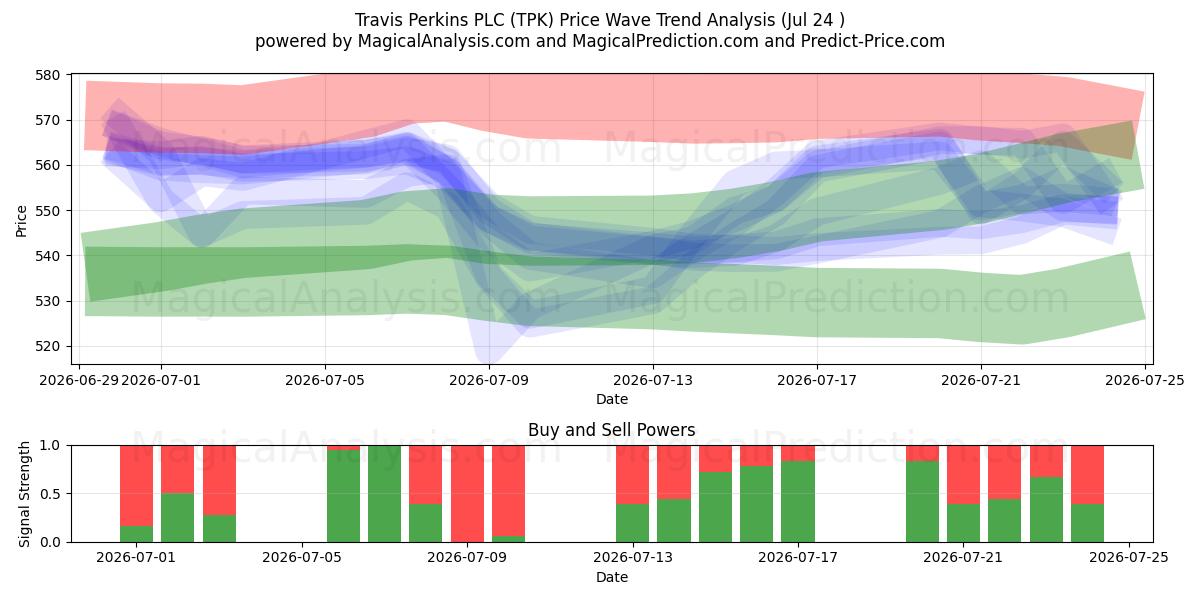
Die 256 Signale wurden in vier verschiedene Strategien unterteilt, die jeweils aus 64 Signalen bestehen. Lassen Sie uns in die Einzelheiten jeder Strategie eintauchen:
Strategie 1:
Kaufsignale:
Verkaufssignale:
Neutrale Signale:
Ergebnis: Diese Strategie führt zu einer Position.
Strategie 2:
Kaufsignale:
Verkaufssignale:
Neutrale Signale:
Ergebnis: Diese Strategie führt zu einer Position.
Strategie 3:
Kaufsignale:
Verkaufssignale:
Neutrale Signale:
Ergebnis: Diese Strategie führt zu einer Position.
Strategie 4:
Kaufsignale:
Verkaufssignale:
Neutrale Signale:
Ergebnis: Diese Strategie führt zu einer Position.
Gesamtstrategie:
Kaufsignale: 4
Verkaufssignale: 18
Neutrale Signale: 77
Ergebnis: Diese Strategie führt zu einer Verkaufen Position.
Haftungsausschluss! Bitte seien Sie vorsichtig und ziehen Sie gründliche Überlegungen in Betracht, bevor Sie finanzielle Entscheidungen treffen. Es ist wichtig zu beachten, dass unsere Signale ausschließlich auf täglichen Preisänderungen basieren und externe Faktoren wie Nachrichten, Marktsentiment oder Unternehmensentwicklungen nicht berücksichtigen. Wir empfehlen dringend, alle relevanten Faktoren zu berücksichtigen und eigene Recherchen durchzuführen.
Nützliche Tipps: Um die bestmöglichen Entscheidungen über Ihre Travis Perkins PLC (TPK) Investitionen zu treffen, empfehlen wir Ihnen dringend, die "magicalprediction" KI-Modelle Signalseite zu besuchen. Dort finden Sie kostenlose Signale, und wenn eines mit unseren übereinstimmt, ist es wahrscheinlich ein zuverlässiger Indikator, wie wir im Laufe der Zeit beobachtet haben.
Ergebnis: Betrachtet man die technische Analyse für Travis Perkins PLC (TPK) am , gibt es eine Tendenz zu einem Verkaufssignal basierend auf historischen Daten und Analysen. Es ist jedoch entscheidend, sich daran zu erinnern, dass diese Signale keine Garantien sind. Stellen Sie sicher, dass Sie die allgemeinen Marktbedingungen sorgfältig berücksichtigen und Ihre Entscheidungen mit Ihren spezifischen Anlagezielen abstimmen.
Basierend auf den oben genannten Signalen und Prognosen empfehlen wir die folgenden Strategien:
Travis Perkins PLC (TPK) Handelsstrategie für Käufer (Long-Positionen): Wenn Sie sich derzeit in einer Kaufposition (Long) befinden, ist es ratsam, den optimalen Zeitpunkt für den Ausstieg aus Ihrer Position basierend auf einer Kombination technischer Signale zu identifizieren. Anleger mit hoher Risikobereitschaft können entscheiden, abzuwarten und die Marktbewegungen in den nächsten Tagen zu beobachten.
Travis Perkins PLC (TPK) Handelsstrategie für Verkäufer (Short-Positionen): Wenn Sie sich in einer Verkaufsposition (Short) befinden, kann das Halten Ihrer Position die richtige Strategie sein, wie die Konsensmeinung unserer technischen Analyse zeigt. Seien Sie jedoch vorsichtig und überwachen Sie die Marktentwicklungen genau.
Für neue Positionen: Wenn Sie derzeit nicht investiert sind oder erwägen, in eine Verkaufsposition (Short) zu wechseln, wird empfohlen, das potenzielle Abwärtsrisiko von 6.18% basierend auf dem niedrigsten erwarteten Preisbereich zu bewerten. Stellen Sie sicher, dass dies mit Ihrer Risikobereitschaft und Ihren Zielen übereinstimmt, indem Sie gründliche Recherchen durchführen, bevor Sie eine Short-Position eingehen.
In allen Handelsszenarien ist eine gut definierte Stop-Loss-Strategie entscheidend, um potenzielle Abwärtsrisiken effektiv zu steuern.
Nützlicher Tipp: Für langfristige Prognosen empfehlen wir die Nutzung der "Predict-price" Website, die sowohl kurzfristige als auch langfristige Vorhersagen kostenlos anbietet. Diese Ressource kann die informierte Entscheidungsfindung bezüglich Ihrer **Travis Perkins PLC (TPK)** Investitionen unterstützen.
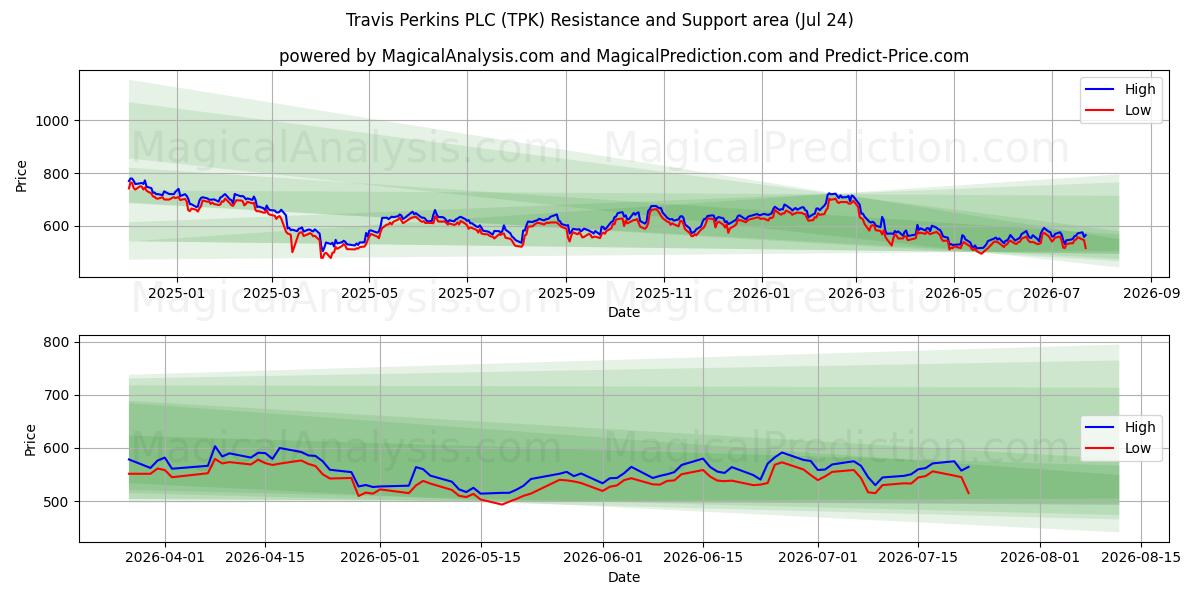
Travis Perkins PLC (TPK) Preisanalysen und Unterstützungsniveaus:
In unserer aktuellen Travis Perkins PLC (TPK) Position befinden wir uns in einer Short-Position und erwarten einen potenziellen Abwärtstrend. Es ist entscheidend, die wichtigsten Unterstützungsniveaus zu verstehen, da diese wichtige Bezugspunkte für Händler und Investoren sind, um informierte Entscheidungen zu treffen.Erstes Unterstützungsniveau: 539.8911328125
Wir überwachen den Preis bei 539.8911328125, dem ersten Unterstützungsniveau. Wenn der Abwärtstrend anhält und dieses Niveau durchbrochen wird, würde dies starken Verkaufsdruck signalisieren und die Möglichkeit einer weiteren Preisverringerung andeuten.
Zweites Unterstützungsniveau: 519.89517468604
Wenn das erste Unterstützungsniveau durchbrochen wird, wird das zweite Unterstützungsniveau bei 519.89517468604 entscheidend. Ein Durchbruch hier würde auf eine stärkere Abwärtsbewegung hinweisen, wahrscheinlich getrieben durch Marktsentiment oder externe Faktoren.
Drittes Unterstützungsniveau: 493.39999389648
Wenn das zweite Unterstützungsniveau durchbrochen wird und der Preis weiter sinkt, signalisiert dies einen signifikanten Marktwandel. Unterhalb von 493.39999389648 zu bleiben, würde einen anhaltenden Abwärtstrend bestätigen, wobei Händler wahrscheinlich dieses dritte Niveau als nächsten Unterstützungspunkt ins Visier nehmen.
Diese Unterstützungsniveaus sollten im Kontext der breiteren Marktentwicklungen und Indikatoren sorgfältig berücksichtigt werden. Durch Wachsamkeit und kontinuierliche Marktanalysen können Sie informierte Entscheidungen beim Handel mit Travis Perkins PLC (TPK) treffen. Wenn Sie diese Unterstützungsniveaus im Hinterkopf behalten, können Sie sich an die dynamische Natur des Marktes anpassen und intelligentere Handelsentscheidungen treffen.
Travis Perkins PLC (TPK) technisches Analyse-Diagramm
Travis Perkins PLC (TPK) Unterstützungs- und Widerstandsniveaus
| Name | Level1 | Level2 | Level3 | Level4 | Level5 |
|---|---|---|---|---|---|
| Widerstand | 642.87039378096 | 659.8669557089 | 674.91199433491 | -- | -- |
| Unterstützung | 539.8911328125 | 519.89517468604 | 493.39999389648 | -- | -- |
Travis Perkins PLC (TPK) Signalliste für 23 Jul
| Overall Signals |
|---|
Travis Perkins PLC (TPK) Kerzenmuster zu 23 Jul
Travis Perkins PLC (TPK) technische Analyse der letzten Tage
| # | Date | Overal Signals | ALL Signals |
|---|---|---|---|
| 1 | 23 Jul | S | KAMA 2KAMA 3MIDPOINT Slope 3TEMA Price 3TRIMA Slope 2SAR CrossoverMOM Crossover 2ROC Threshold 1ROCR Threshold 1ROCR Threshold 3BOP Smoothed ThresholdDaily Pivot Point 1Vortex Indicator |
| 2 | 22 Jul | B | EMA Price Cross 1EMA Price Cross 2EMA Price Cross 3EMA Price Cross 4WMA Crossover 3TRIMA Slope 2AROONOSC 2MOM Crossover 1PLUS_DI Threshold 2ROCR Threshold 2BOP Smoothed ThresholdSTOCH Normal Zone CrossBBANDS Breakout 1Stochastic RSI SignalVolume SpikeIchimoku 2Ichimoku 3Rolling VWAPElder's Force Index |
| 3 | 21 Jul | B | EMA Price Cross 1EMA Price Cross 2EMA Price Cross 3EMA Price Cross 4KAMA 1WMA Crossover 1TEMA Price 1TEMA Price 2TEMA Price 3TRIMA Slope 1MOM Crossover 2PLUS_DI Threshold 1PLUS_DI Threshold 2ROC Threshold 1ROCR Threshold 2TRIX Crossover 1BOP Smoothed ThresholdBBANDS Breakout 1Stochastic RSI SignalEngulfing PatternIchimoku 2Daily Pivot Point 1Rolling VWAPElder's Force IndexCMO Divergence 1 |
| 4 | 20 Jul | S | KAMA 2KAMA 3T3 Slope 1TEMA Price 2TEMA Price 3TRIMA Slope 1SAR CrossoverAROONOSC 1AROONOSC 3MOM Crossover 1MOM Crossover 2PLUS_DI Threshold 1PLUS_DI Threshold 2WILLR Exit OversoldWILLR Exit OverboughtBOP Smoothed ThresholdMACD Crossover 2CMO Divergence 1 |
| 5 | 17 Jul | B | KAMA 2EMA Crossover 2EMA Crossover 3MIDPOINT Slope 1MIDPOINT Slope 2TEMA Price 2TEMA Price 3TRIMA Slope 1MOM Crossover 1PLUS_DI Threshold 1PLUS_DI Threshold 2ROCR Threshold 2ROCR Threshold 4BOP Smoothed ThresholdHammer / Hanging ManIchimoku 2Daily Pivot Point 1Elder's Force IndexCMO Divergence 1 |
| 6 | 16 Jul | B | WMA Crossover 2MIDPOINT Slope 2TEMA Price 2TEMA Price 3TRIMA Slope 1TRIMA Slope 3PLUS_DI Threshold 1PLUS_DI Threshold 2ROCR Threshold 1ROCR Threshold 2BBANDS Breakout 1Hammer / Hanging ManCMO Divergence 1 |
| 7 | 15 Jul | B | EMA Price Cross 1EMA Price Cross 2EMA Price Cross 3EMA Crossover 1MIDPOINT Slope 1T3 Slope 2TEMA Price 2TEMA Price 3TRIMA Slope 1TRIMA Slope 2MOM Crossover 2PLUS_DI Threshold 1PLUS_DI Threshold 2ROC Threshold 2ROCR Threshold 3BOP Smoothed ThresholdMACD Crossover 1Chaikin ADOSC Zero CrossIchimoku 3Daily Pivot Point 1Rolling VWAPCMO Divergence 1 |
| 8 | 14 Jul | B | EMA Price Cross 4WMA Crossover 1MIDPOINT Slope 1MIDPOINT Slope 2T3 Slope 2TEMA Price 1TEMA Price 2TRIMA Slope 2MOM Crossover 2PLUS_DI Threshold 1PLUS_DI Threshold 2ROCR Threshold 3BOP Smoothed ThresholdOBV CrossoverChaikin AD CrossoverVortex Indicator |
| 9 | 13 Jul | B | KAMA 4MIDPOINT Slope 3T3 Slope 1T3 Slope 2TEMA Price 1TEMA Price 2TEMA Price 3TRIMA Slope 1TRIMA Slope 2CCI Crossover 1CCI Crossover 2CCI Crossover 3PLUS_DI Threshold 1PLUS_DI Threshold 2BOP Smoothed ThresholdSTOCH Normal Zone CrossDaily Pivot Point 1 |
| 10 | 10 Jul | N | DEMA 2DEMA 3KAMA 3KAMA 4MIDPOINT Slope 1MIDPOINT Slope 3T3 Slope 1T3 Slope 2TEMA Price 3TRIMA Slope 1RSI Exit OversoldBOP Smoothed ThresholdBBANDS Breakout 2Stochastic RSI SignalIchimoku 1Coppock Curve |
| 11 | 09 Jul | S | DEMA 1DEMA 2DEMA 3KAMA 1KAMA 2KAMA 3KAMA 4EMA Crossover 2EMA Crossover 3EMA Crossover 4WMA Crossover 3MIDPOINT Slope 1MIDPOINT Slope 2MIDPOINT Slope 3MIDPOINT Slope 4T3 Slope 1TEMA Price 1TEMA Price 2TEMA Price 3TRIMA Slope 1AROONOSC 2AROONOSC 3AROONOSC 4MOM Crossover 1MOM Crossover 2ROC Threshold 1ROC Threshold 2ROCR Threshold 1ROCR Threshold 2ROCR Threshold 3ROCR Threshold 4TRIX Crossover 2WILLR Exit OversoldWILLR Exit OverboughtBOP Smoothed ThresholdDEMA with ATR 1DEMA with ATR 2DEMA with ATR 3Donchian ChannelIchimoku 3Daily Pivot Point 1Vortex IndicatorCMO Divergence 1CMO Divergence 2 |
| 12 | 08 Jul | S | DEMA 2EMA Price Cross 1EMA Price Cross 2EMA Price Cross 3EMA Price Cross 4EMA Crossover 1WMA Crossover 1MIDPOINT Slope 3TEMA Price 1TEMA Price 2TEMA Price 3SAR CrossoverPLUS_DI Threshold 1PLUS_DI Threshold 2BOP Smoothed ThresholdMACD Crossover 2STOCH Normal Zone CrossBBANDS Breakout 1Stochastic RSI SignalChaikin AD CrossoverChaikin ADOSC Zero CrossVolume SpikeIchimoku 2Daily Pivot Point 1Rolling VWAPElder's Force IndexCMO Divergence 1CMO Divergence 2 |
| 13 | 07 Jul | S | KAMA 2KAMA 3AROONOSC 1PLUS_DI Threshold 1PLUS_DI Threshold 2ROC Threshold 2BOP Smoothed ThresholdChaikin ADOSC Zero CrossCMO Divergence 1 |
| 14 | 06 Jul | B | EMA Price Cross 1EMA Price Cross 2EMA Price Cross 4KAMA 2KAMA 3EMA Crossover 1EMA Crossover 4WMA Crossover 1MIDPOINT Slope 2MOM Crossover 2PLUS_DI Threshold 1PLUS_DI Threshold 2ROC Threshold 1ROCR Threshold 2ROCR Threshold 3TRIX Crossover 1STOCH Normal Zone CrossStochastic RSI SignalIchimoku 3Elder's Force IndexCMO Divergence 1 |
| 15 | 03 Jul | B | EMA Price Cross 1EMA Price Cross 2WMA Crossover 2TEMA Price 3TRIMA Slope 1MOM Crossover 2PLUS_DI Threshold 1PLUS_DI Threshold 2BOP Smoothed ThresholdChaikin AD Crossover |
| 16 | 02 Jul | N | EMA Price Cross 1EMA Price Cross 2MIDPOINT Slope 1TEMA Price 3TRIMA Slope 1TRIMA Slope 2PLUS_DI Threshold 1PLUS_DI Threshold 2ROC Threshold 2ROCR Threshold 1ROCR Threshold 2Hammer / Hanging ManIchimoku 2Ichimoku 3 |
| 17 | 01 Jul | B | DEMA 1EMA Price Cross 1EMA Price Cross 2EMA Crossover 1WMA Crossover 1MIDPOINT Slope 1MIDPOINT Slope 2T3 Slope 2TEMA Price 1TEMA Price 2TEMA Price 3TRIMA Slope 2PLUS_DI Threshold 1PLUS_DI Threshold 2BOP Smoothed ThresholdMACD Crossover 1STOCH Normal Zone CrossPercentage Price OscillatorIchimoku 2Daily Pivot Point 1Elder's Force IndexCMO Divergence 1 |
| 18 | 30 Jun | S | DEMA 1EMA Price Cross 4KAMA 3MIDPOINT Slope 4T3 Slope 1T3 Slope 2TEMA Price 1TEMA Price 2TEMA Price 3TRIMA Slope 1CCI Crossover 1CCI Crossover 2CCI Crossover 3PLUS_DI Threshold 1PLUS_DI Threshold 2BOP Smoothed ThresholdStochastic RSI SignalCMO Divergence 2 |
| 19 | 29 Jun | S | DEMA 3KAMA 1KAMA 2KAMA 3KAMA 4MIDPOINT Slope 1T3 Slope 1T3 Slope 2TEMA Price 3TRIMA Slope 1AROONOSC 3PLUS_DI Threshold 1PLUS_DI Threshold 2RSI Exit OversoldBBANDS Breakout 2Percentage Price OscillatorCMO Divergence 2 |
| 20 | 26 Jun | B | DEMA 1DEMA 2DEMA 3KAMA 1KAMA 2KAMA 3KAMA 4WMA Crossover 2MIDPOINT Slope 1MIDPOINT Slope 2MIDPOINT Slope 3MIDPOINT Slope 4T3 Slope 1TEMA Price 1TEMA Price 2TEMA Price 3TRIMA Slope 1SAR CrossoverAROONOSC 1PLUS_DI Threshold 1PLUS_DI Threshold 2TRIX Crossover 1WILLR Exit OversoldWILLR Exit OverboughtBOP Smoothed ThresholdDonchian ChannelDaily Pivot Point 1CMO Divergence 1 |
| 21 | 25 Jun | B | DEMA 1DEMA 2DEMA 3EMA Price Cross 1EMA Price Cross 2EMA Price Cross 3EMA Price Cross 4KAMA 1KAMA 2KAMA 3KAMA 4EMA Crossover 1EMA Crossover 2WMA Crossover 1MIDPOINT Slope 1MIDPOINT Slope 2MIDPOINT Slope 3MIDPOINT Slope 4TEMA Price 1TEMA Price 2TEMA Price 3AROONOSC 2CCI Crossover 1CCI Crossover 3MOM Crossover 1MOM Crossover 2PLUS_DI Threshold 1PLUS_DI Threshold 2ROC Threshold 1ROC Threshold 2ROCR Threshold 1ROCR Threshold 2ROCR Threshold 3ROCR Threshold 4BOP Smoothed ThresholdMACD Crossover 1MACD Crossover 2STOCH Normal Zone CrossBBANDS Breakout 1Stochastic RSI SignalIchimoku 2Ichimoku 3Daily Pivot Point 1Rolling VWAPElder's Force IndexCMO Divergence 1 |
| 22 | 24 Jun | B | DEMA 1DEMA 2DEMA 3KAMA 1KAMA 2KAMA 3KAMA 4MIDPOINT Slope 1MIDPOINT Slope 2T3 Slope 1TEMA Price 2TEMA Price 3TRIMA Slope 1MOM Crossover 1MOM Crossover 2ROCR Threshold 4TRIX Crossover 1WILLR Exit OversoldWILLR Exit OverboughtMACD Crossover 2Percentage Price OscillatorIchimoku 2CMO Divergence 1 |
| 23 | 23 Jun | S | DEMA 2KAMA 4EMA Crossover 2MIDPOINT Slope 2TEMA Price 2TEMA Price 3TRIMA Slope 1AROONOSC 3MOM Crossover 1PLUS_DI Threshold 1PLUS_DI Threshold 2BOP Smoothed ThresholdCMO Divergence 1CMO Divergence 2 |
| 24 | 22 Jun | S | DEMA 1DEMA 2EMA Price Cross 1EMA Price Cross 2EMA Price Cross 3EMA Price Cross 4KAMA 1KAMA 4EMA Crossover 1WMA Crossover 2MIDPOINT Slope 1MIDPOINT Slope 2TEMA Price 1TEMA Price 2TEMA Price 3TRIMA Slope 1AROONOSC 1MOM Crossover 1PLUS_DI Threshold 1PLUS_DI Threshold 2ROCR Threshold 1BOP Smoothed ThresholdBBANDS Breakout 1Volume SpikeIchimoku 3Rolling VWAPElder's Force IndexCMO Divergence 1 |
| 25 | 19 Jun | S | EMA Price Cross 4KAMA 2KAMA 3MIDPOINT Slope 1TEMA Price 3TRIMA Slope 2TRIMA Slope 3SAR CrossoverPLUS_DI Threshold 1PLUS_DI Threshold 2ROC Threshold 2ROCR Threshold 1BOP Smoothed ThresholdStochastic RSI SignalIchimoku 3Elder's Force Index |
| 26 | 18 Jun | B | WMA Crossover 1MIDPOINT Slope 4TEMA Price 1TEMA Price 2TEMA Price 3TRIMA Slope 2PLUS_DI Threshold 1PLUS_DI Threshold 2BOP Smoothed ThresholdMACD Crossover 1Elder's Force Index |
| 27 | 17 Jun | N | DEMA 1EMA Price Cross 4KAMA 2MIDPOINT Slope 4T3 Slope 1TEMA Price 1TEMA Price 2TEMA Price 3TRIMA Slope 1TRIMA Slope 2CCI Crossover 1CCI Crossover 2CCI Crossover 3PLUS_DI Threshold 1PLUS_DI Threshold 2BOP Smoothed ThresholdSTOCH Normal Zone CrossStochastic RSI SignalOBV Crossover |
| 28 | 16 Jun | S | DEMA 2DEMA 3KAMA 1KAMA 2KAMA 3MIDPOINT Slope 3T3 Slope 1TEMA Price 3TRIMA Slope 1TRIMA Slope 2PLUS_DI Threshold 1PLUS_DI Threshold 2RSI Exit OversoldBOP Smoothed Threshold |
| 29 | 15 Jun | B | DEMA 1DEMA 2DEMA 3KAMA 1KAMA 2KAMA 3WMA Crossover 4MIDPOINT Slope 1MIDPOINT Slope 2MIDPOINT Slope 3MIDPOINT Slope 4T3 Slope 1TEMA Price 1TEMA Price 2TEMA Price 3TRIMA Slope 1AROONOSC 3PLUS_DI Threshold 1PLUS_DI Threshold 2ROC Threshold 1ROCR Threshold 1ROCR Threshold 2WILLR Exit OversoldWILLR Exit OverboughtBOP Smoothed ThresholdIchimoku 3CMO Divergence 1 |
| 30 | 12 Jun | B | DEMA 3KAMA 4WMA Crossover 1MIDPOINT Slope 2MOM Crossover 1PLUS_DI Threshold 1PLUS_DI Threshold 2ROCR Threshold 1BOP Smoothed ThresholdSTOCH Normal Zone Cross |
Benutzerprognosen für Travis Perkins PLC (TPK)
Was ist Ihre Vorhersage?
In this section, you can easily predict without user registration. See also other users predictions.
